JOURNAL OF TECHNOLOGY AND DESIGN

Review Policy

I. Editorial and Peer Review Process

The Journal applies a double-anonymous peer review model in accordance with international scholarly publishing standards. All submissions are processed through the journal's online manuscript management system, allowing authors to monitor the progress of their manuscripts throughout the editorial process.

Stage 1

Initial Screening

Stage 2

Peer Review

Stage 3

Final Decision

II. Editorial and Peer Review Workflow

The editorial and peer review process of JTD consists of three main stages. Following submission, authors receive an automatic acknowledgement email. All manuscripts are handled through the journal's online submission system, enabling authors to monitor the status of their manuscripts throughout the review process.

Stage 1: Initial Screening

Every submitted manuscript undergoes an initial editorial assessment consisting of two mandatory evaluations:

Research Integrity Check

  • Plagiarism and text overlap.
  • Use of Artificial Intelligence (AI).
  • Duplicate or redundant publication.

Compliance Assessment

  • Compliance with the Journal's Author Guidelines.
  • Formatting requirements and academic standards for manuscripts in the fields of Technology, Engineering, and Design.

Possible Outcomes

  • Proceed to Peer Review: Manuscripts meeting all requirements are sent for peer review.
  • Returned or Rejected:
    • Returned to the authors for revision; or
    • Rejected if the manuscript does not satisfy the journal's basic requirements.

Processing time: Up to 5 working days.

Stage 2: Peer Review

Manuscripts that pass the initial screening are assigned to at least two independent reviewers with expertise relevant to the subject area.

Review Criteria

  • Structure, presentation, and clarity of the manuscript;
  • Theoretical foundation, conceptual framework, or technical basis;
  • Research, design, or technical methodology;
  • Validity and reliability of data, models, experiments, or evaluation;
  • Scientific contribution and practical relevance to the fields of Technology, Design, and Innovation.

Review Outcomes

  • Accept;
  • Revision (Major or Minor);
  • Reject.

Review period: 1–21 days.
Author revision: 1–10 days.
Typical review duration: Approximately 1–3 months.

Stage 3: Final Decision

The Editor-in-Chief is responsible for the final editorial decision based on:

  • Reviewers' reports and recommendations;
  • The scientific quality and completeness of the manuscript;
  • The journal's scope and editorial priorities.

In cases where reviewers provide conflicting recommendations, the Editorial Board may invite additional reviewers to ensure a fair and objective evaluation.

The time to the final editorial decision may take up to 9 months from the commencement of the peer review process.
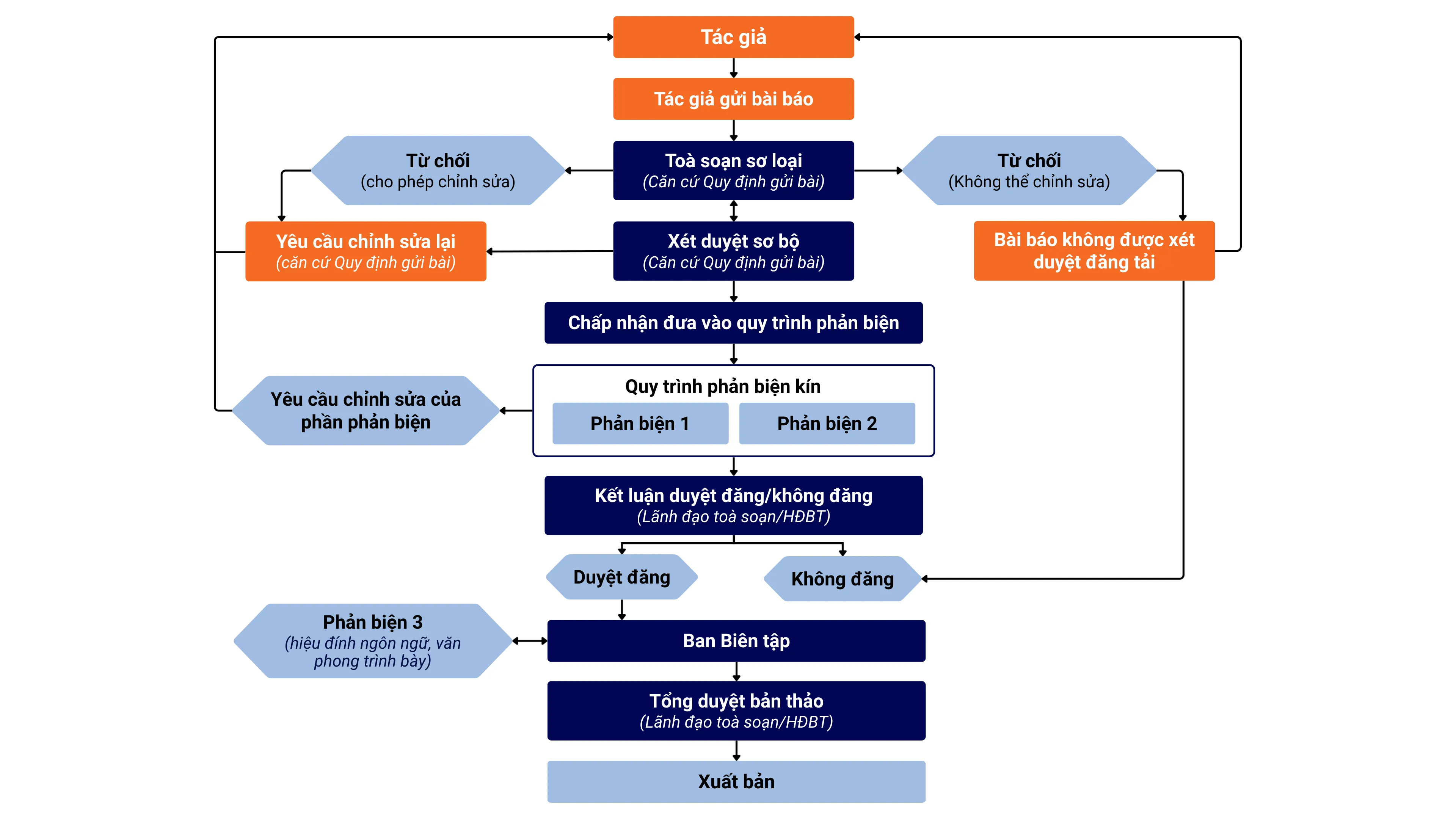
JTD Editorial and Peer Review Workflow
Figure 1. Editorial and Peer Review Workflow of the Journal of Technology and Design (JTD)

III. Peer Review

At least two independent reviewers are assigned by the Editorial Board. Manuscripts are evaluated based on the following criteria:

Structure, presentation, and clarity of the manuscript.
Theoretical foundation, conceptual framework, or technical basis.
Research, design, or technical methodology.
Validity and reliability of data, models, experiments, or evaluation.
Scientific contribution and practical relevance to the fields of Technology, Design, and Innovation.

Review Outcomes

  • Accept.
  • Revision (Major/Minor).
  • Reject.

IV. Final Decision

The Editor-in-Chief is responsible for making the final decision on all manuscripts, based on:

  • Reviewers' reports.
  • The quality and completeness of the manuscript.
  • The scope and priorities of the journal.
  • In cases of conflicting reviews, additional reviewers may be consulted.
  • The time to final decision may take up to 9 months from the commencement of peer review.